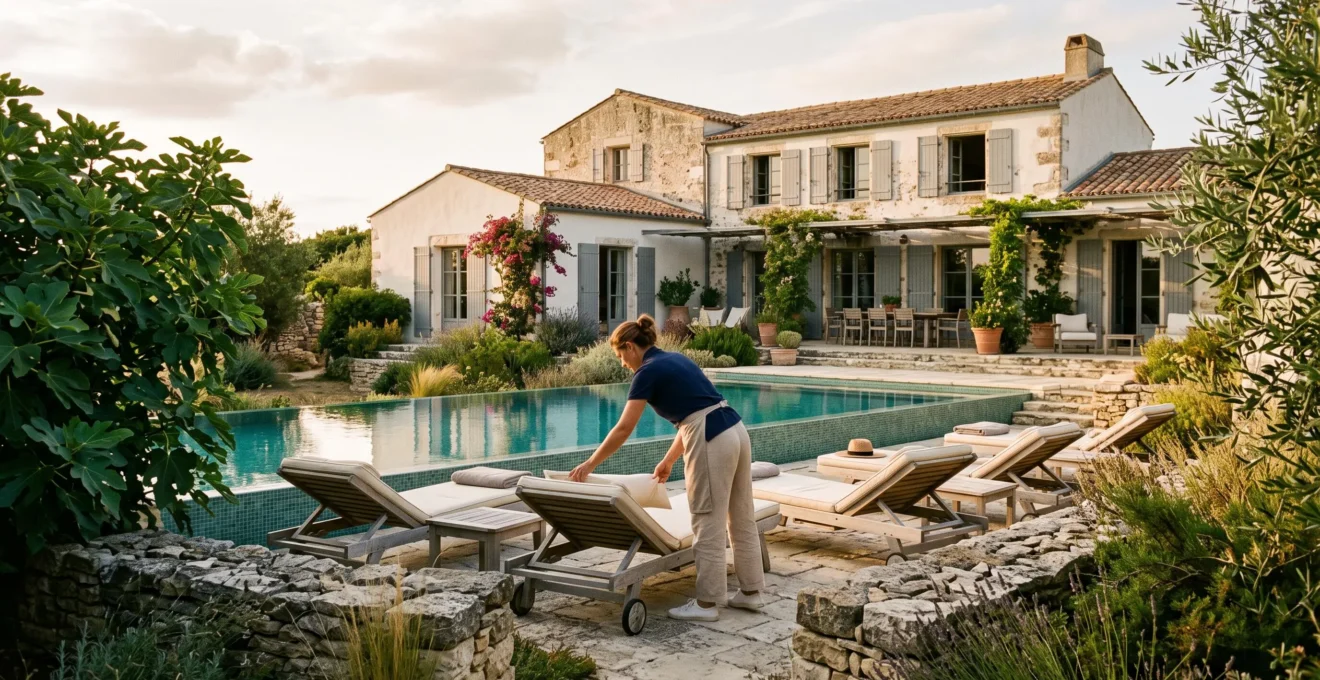
On Île de Ré, the gap between a beautiful “maison de caractère” and a true luxury villa is rarely about charm alone. It is about a hierarchy of amenities—especially outdoors—designed for a coastal climate, combined with verifiable standards (safety, rental compliance) and services that remove friction from your stay.
If your concern is paying a premium for average delivery, the most reliable approach is to compare listings against a short, localised baseline: must-have features first, then optional upgrades that only make sense if you will actually use them on the island.
Direct answer: A luxury villa on Île de Ré should first secure high-end outdoor living (often including a private pool with compliant safety equipment), generous privacy and space, a kitchen and interiors suited to hosting, and then add services (linen, housekeeping, concierge) that make the stay effortless—while remaining consistent with the island’s maraîchin-inspired architectural character and coastal constraints.
Your priority grid for a luxury villa on Île de Ré
- Must-have: outdoor spaces designed for wind/sun + privacy; high-spec kitchen; excellent bedding and bathrooms; dependable connectivity.
- Must-have if there is a pool: a compliant pool safety device (France has legal requirements for private in-ground/semi-in-ground pools).
- Strongly recommended: linen and end-of-stay cleaning clarity, responsive on-island contact, secure parking/storage for bikes and beach gear.
- Optional upgrades: heated pool, spa/gym, chef/concierge, premium entertainment—worth it only if aligned with your plans.
- Before booking: verify local furnished seasonal rental rules and ask targeted questions about what is included vs. “available on request”.
What Defines a Luxury Villa on Île de Ré?
A luxury villa on Île de Ré is best defined by coherence: architecture and materials that feel right for the island, plus amenities that make everyday living effortless for demanding travellers. The “luxury” label becomes credible when the property performs as well as it photographs—particularly outdoors, where coastal wind, salt air and changing light quickly expose shortcuts.
Luxury villa vs. maison de caractère: what is the practical difference?
A “maison de caractère” can be beautiful and authentic—stonework, enclosed garden, tasteful renovation—without necessarily offering the operational comfort you expect at a premium price point. A luxury villa, by contrast, typically adds a higher level of privacy, larger and better-designed outdoor living areas, more consistent bedroom/bathroom standards across the house, and services or management that reduce uncertainty (arrival, linen, maintenance responsiveness).
In other words: character is an aesthetic; luxury is an end-to-end experience. If a listing is charming but vague on what is included (linen, heating/cooling, outdoor furniture quality, pool management), treat “luxury” as a claim to verify—not a guarantee.
How does maraîchin heritage influence what “high-end” looks like on the island?
Île de Ré’s built identity is often associated with simple, bright volumes, enclosed gardens and restrained lines—an aesthetic that can echo maraîchin heritage inspirations without turning the villa into a museum piece. For you as a traveller, the useful takeaway is not a decorative checklist, but a quality signal: when a property respects local codes (proportions, shutters, courtyards, natural materials), it is more likely to have been designed with intention rather than assembled for marketing photos.
Practical reading tip: on Île de Ré, a “local look” should come with “local performance”—sheltered terraces, durable outdoor materials, and storage that acknowledges sand, bikes and salt air.
A quick comparison you can use when browsing listings
Use this rule of thumb: if two properties have similar charm, the one that is genuinely premium will be more explicit—about outdoor comfort, services, and operational details (who meets you, what is included, how issues are handled). For a neutral reference point on what can be evaluated officially, the island’s tourism office explains that furnished tourist accommodation can be classified by stars under a national criteria grid—while not imposing a fixed “luxury amenities” list: Les meublés de tourisme.
Which Amenities Do Demanding Travellers Expect First?
If you pay for a top-tier seasonal rental, your first expectations are usually the most concrete: outdoor living that works in real conditions, a pool that is both enjoyable and safe, and interiors that support group life without friction. On Île de Ré, those expectations are amplified by the coastline: wind, salt, shifting weather and a lifestyle that moves between beach, market and terrace.
Is a private pool non-negotiable on Île de Ré?
A private pool is often the first filter for travellers looking at a luxury villa—especially for multi-generational stays or groups who want reliable downtime without planning around beaches and tides. That said, it is not inherently “luxury” by itself: what matters is the pool’s integration (privacy, sun exposure, wind shelter), maintenance clarity, and whether it is usable in the conditions you expect (for example, whether heating is offered and clearly described).
Do not treat “pool” as a simple tick-box: if the listing is vague about safety equipment, maintenance or accessibility, you may be looking at an amenity that photographs well but complicates the stay.
What pool safety rules apply in France, and why should you care as a renter?
In France, private in-ground or semi-in-ground pools must have a standardised safety device. The French Ministry for Ecological Transition states that the legal scheme has applied since 2004, and that non-compliance can be sanctioned: obligations légales de sécurité piscine.
As a renter, this matters for two reasons. First, it is a concrete, verifiable indicator of seriousness. Second, it affects real-life usability: a well-chosen safety solution should protect children without turning pool access into a daily struggle for the group.
Outdoor living spaces: what should be designed specifically for coastal conditions?
On Île de Ré, outdoor living is not an accessory—it is where a premium villa should “earn” its price. Look for terraces and lounges that are both sunny and sheltered, with comfortable seating that is stable in wind, and lighting that allows long evenings without harsh glare.
A useful scenario when you read a listing: imagine a windy late afternoon after the beach. A well-designed villa offers an outdoor shower, a protected dining area, and a transition space for towels and sandy gear—so the interior stays calm and clean.
Kitchen and interiors: the baseline that should not feel “rental-grade”
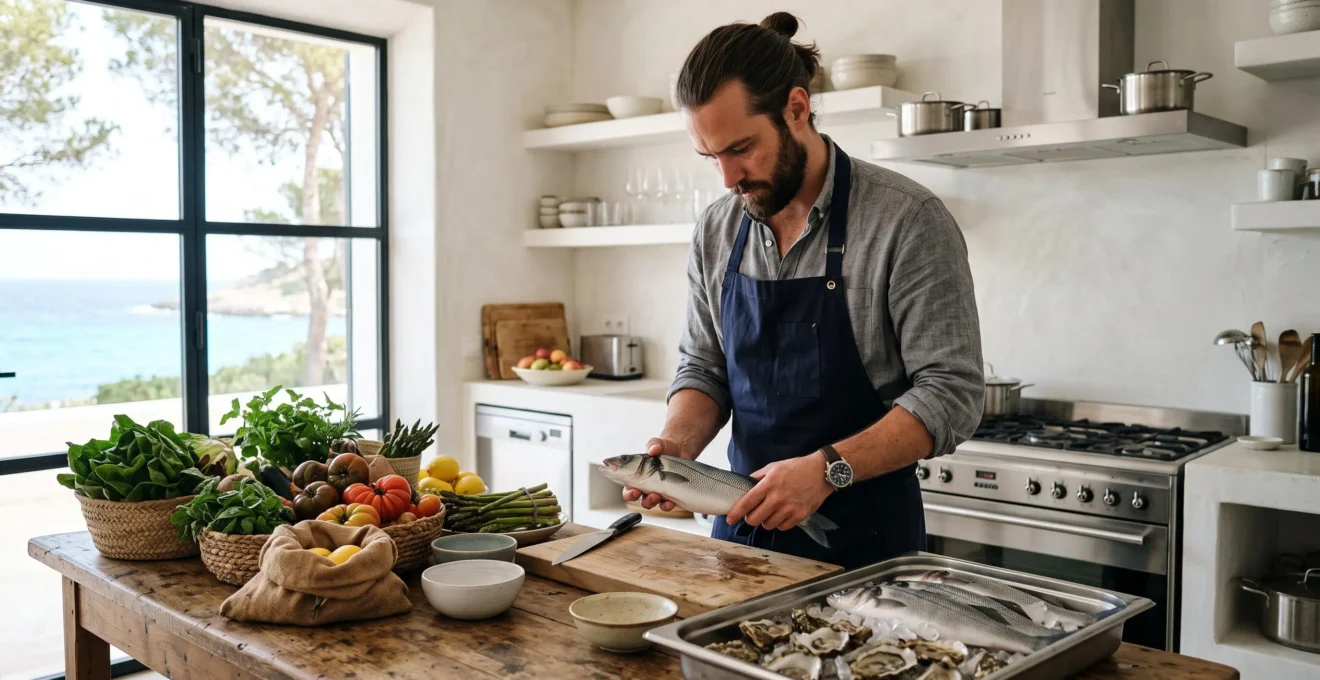
In a luxury villa, the kitchen is not only well-equipped; it is designed for hosting without bottlenecks—space to prep, serve and clear, and appliances that match the occupancy the villa advertises. The same logic applies to the living room: comfortable seating for the full group, lighting that can shift from daytime brightness to evening warmth, and finishes that feel durable rather than decorative.
When comparing listings, prioritise sleep quality over photogenic details. A high-end positioning is hard to justify if bedrooms vary widely in comfort, storage, or bathroom access—because it creates “winners and losers” in the group.
Comfort and Services That Make the Difference
Once the essentials are covered, luxury is often decided by what you do not have to think about: linen, cleaning, reliable hot water, support on arrival, and small comforts that remove daily negotiation within the group. On Île de Ré, mobility and outdoor habits also matter—bikes, beach returns, and the need for organised storage.
Which services are genuinely “premium” (and which are often just marketing)?
Must-have clarity at a high price point is not necessarily “a concierge,” but written confirmation of what is included and who is responsible. Linen and towels, end-of-stay cleaning, and a reachable local contact are the services that most directly protect your experience from avoidable friction.
More “luxury-coded” services—concierge, daily housekeeping, private chef—can be excellent, but they should be treated as optional upgrades unless they are explicitly included and operationally described (hours, scope, how to request).
Connectivity, climate comfort, and entertainment: what to prioritise?
For many travellers, dependable connectivity is now part of the luxury baseline—because it supports both work and entertainment, especially when weather turns. Treat vague claims (“high-speed Wi-Fi”) as a prompt for questions: where is it strongest, is there coverage outdoors, and what is the backup plan if there is an outage?
Climate comfort should be assessed through the island lens: ventilation, shading, and good insulation can matter as much as any single device. The goal is simple—sleep well, avoid overheating on bright days, and remain comfortable when coastal weather shifts.

Wellness amenities: when do spa, gym, or a heated pool truly add value?
Wellness features justify themselves when they match how you will spend time on the island. A heated pool can be a meaningful comfort if you plan villa time outside peak heat; a spa can be valuable for mixed weather weeks; a small gym matters when your group includes active travellers who keep routines regardless of conditions.
The most practical way to judge them is to ask: are they easy to use daily, or are they “nice to have” features that come with rules, setup steps, or extra fees that the listing does not state clearly?
Bikes and beach logistics: the island-specific upgrade many travellers overlook
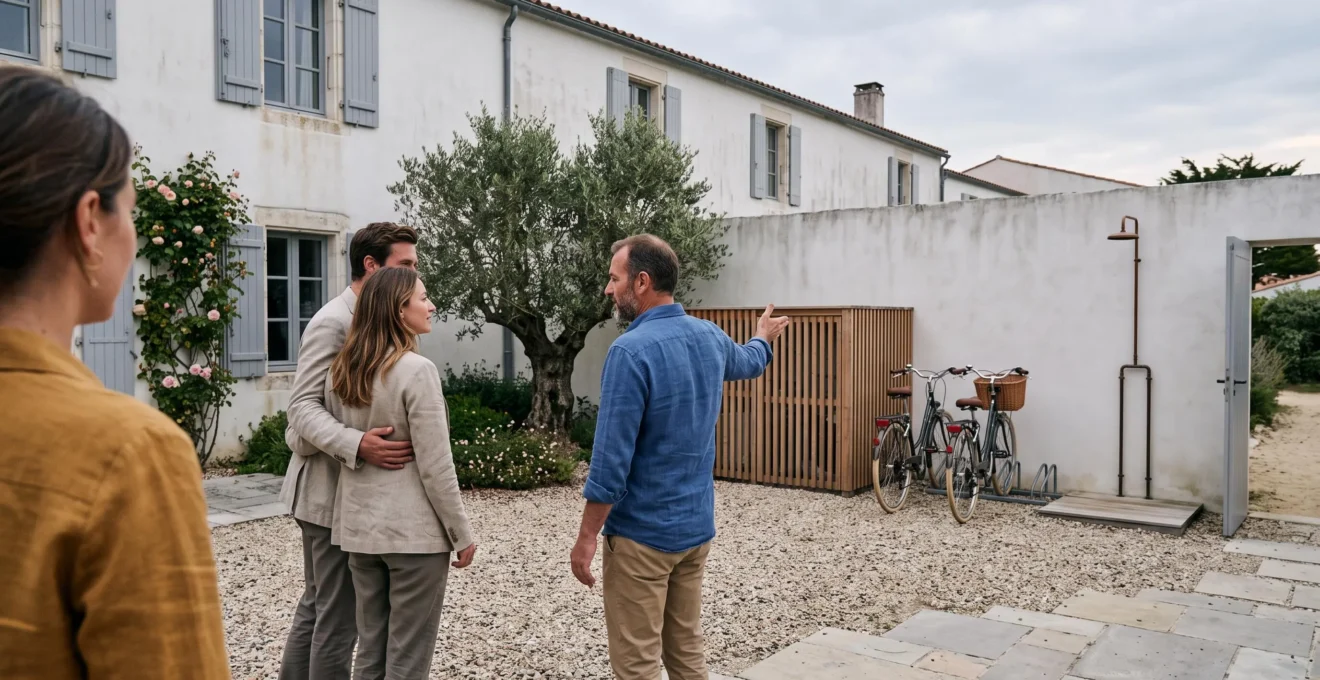
Île de Ré’s lifestyle often revolves around cycling and beach returns. A premium villa frequently performs better when it anticipates this: secure bike storage, a rinse area or outdoor shower, and organised space for helmets, baskets and wet gear.
If bikes are provided, treat it as an optional plus—what matters more is whether the property makes cycling practical (safe storage and easy access), so you can rent the exact type you want nearby without friction.
Cas pratique
Hypothetical scenario: you are booking for two couples and three children. Villa A advertises a pool and “family-friendly” positioning but is vague on linen and the pool safety setup. Villa B lists included linen, a clear arrival process, and specifies the pool safety device, plus sheltered outdoor dining and an outdoor shower. Even if both look equally charming, Villa B is more likely to deliver a luxury experience because the essentials are explicit and aligned with real island use (wind, beach returns, children’s safety).
How to Check a Villa Meets Local Rental Standards
To avoid paying a premium for average delivery, verification matters as much as amenities. On Île de Ré, there are also local rules around seasonal rentals that can affect whether a listing is properly authorised—an important trust signal when you commit to a high-end stay.
What local seasonal rental rules should you be aware of on Île de Ré?
The local intermunicipal authority states that, from 1 June 2025, owners who wish to rent a “meublé de tourisme” on Île de Ré must obtain an authorisation for change of use from their town hall, with an exception for principal residences rented fewer than 120 nights per year: règles de location saisonnière sur l’Île de Ré.
As a traveller, you are not expected to manage administrative details. Still, a host or agency that can answer clearly (registration, status, local contact) is typically a safer choice than one that avoids the topic or stays vague.
A verification checklist you can apply to any “luxury villa” listing
Use this checklist to compare properties on equal terms. It focuses on what you can confirm before payment—photos alone are rarely enough at this price point.
- Amenities, in writing: what is included vs available on request (linen, cleaning, pool heating, baby equipment).
- Pool specifics: type of safety device, who maintains it, and what happens if there is an issue.
- Outdoor usability: sheltered dining, quality of loungers, lighting, and wind protection (walls, hedges, patios).
- Bedroom fairness: consistent bedding quality and storage; avoid “one master suite + several compromise rooms” unless your group accepts it.
- Management reality: who meets you, response time expectations, and whether support is on-island.
- Legitimacy signals: clear legal/administrative status and a contract that matches what is promised in the listing.
What questions should you ask the owner or agency before booking?
Ask short questions that force concrete answers—useful both for clarity and for comparing multiple villas fairly. The goal is not to “catch” anyone; it is to reduce uncertainty.
- “What is included in the price, and what is extra?”
Ask specifically about linen, towels, cleaning, pool heating, baby gear, and any mid-stay services.
- “Who is the on-island contact, and how do check-in/check-out work?”
A luxury experience usually includes a smooth arrival, clear instructions, and accountable support if something fails.
- “How is the pool secured and maintained?”
Request the exact safety device and the maintenance rhythm or responsible party.
- “Are outdoor areas comfortable in wind and strong sun?”
Have them describe sheltered dining, shading and the main lounging spot at peak afternoon conditions.
- “Can you confirm the rental’s administrative compliance on Île de Ré?”
You are looking for a calm, precise answer—another credibility signal when paying a premium.
How can I tell if a luxury villa is authentic rather than overpriced?
Prioritise verifiable essentials: explicit inclusions (linen/cleaning), outdoor comfort designed for coastal conditions, fair bedroom standards, and clear management accountability. Then confirm any “headline” amenity (pool heating, concierge) is operationally defined, not just mentioned.
Is a private pool enough to justify a luxury positioning?
No. A pool can be a major value driver, but luxury is about the whole system: privacy, sheltered outdoor living, quality interiors, consistent bedrooms, and services that remove friction. Also verify pool safety equipment and maintenance arrangements.
Are there official criteria for “luxury” furnished rentals on Île de Ré?
There is an official star classification framework for furnished tourist accommodation in France, based on a criteria grid. It helps structure evaluation, but it does not impose a fixed list of “luxury” amenities—so you still need a must-have vs optional comparison tailored to your stay.
Planning Your Luxury Stay on Île de Ré
Choosing amenities is only half the decision; the other half is matching the villa’s strengths to your travel style. On Île de Ré, the most satisfying high-end stays tend to be those where outdoor life, mobility (often by bike), and the rhythm of coastal weather have been considered upfront.
When should you book, and what should you clarify early?
At a premium level, clarify the non-negotiables early—especially anything that changes day-to-day comfort: pool usability (including heating if relevant), linen/cleaning scope, and outdoor shelter. If you are travelling with children, confirm safety elements and the practical layout (visibility from terrace to pool, gates, and transitions after the beach).
Also align on how changes are handled: late arrival, early departure, and what support exists if an appliance or the pool system fails. Luxury is often less about perfection and more about how professionally issues are managed.
How do you match villa features to your traveller profile?
If your group prioritises entertaining, place the kitchen, terrace dining and living-room seating at the top of your list—before wellness extras. If your priority is rest and reset, weight bedroom consistency, bathrooms, hot water capacity and quiet outdoor corners more heavily than “wow-factor” design elements.
If you plan to explore the island daily, optimise for logistics: secure bike storage, outdoor shower, and a layout that prevents sand from taking over the house.
Which local experiences pair naturally with a high-end villa stay?
A luxury villa works best as a calm base: slow breakfasts, market-driven cooking, and late afternoons in sheltered outdoor spaces. If you want to extend the trip beyond the island theme, you can also look at other coastal itineraries for comparison—Green Coast breaks.
The most reliable way to book without second-guessing is to keep your hierarchy strict: confirm must-haves first, treat optional amenities as “worth it only if used,” and ask short, concrete questions that force equally concrete answers. That is how a luxury villa on Île de Ré becomes a measurable choice—not a leap of faith.